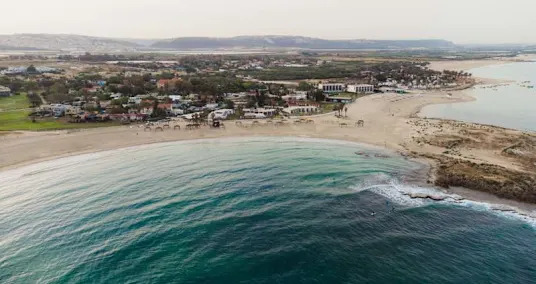
The discovery was made in an ancient shipwreck in the Dor Lagoon near the Carmel Coast, where archaeologists recovered nine pieces of unprocessed iron known as “blooms.”
Researchers from the University of Haifa said Wednesday that an underwater excavation off Israel’s northern Mediterranean coast uncovered what they described as the earliest known cargo of raw iron transported by ship, dating back around 2,600 years, Xinhua reported.
The discovery was made in an ancient shipwreck in the Dor Lagoon near the Carmel Coast, where archaeologists recovered nine pieces of unprocessed iron known as “blooms.” According to the university, the find provides direct evidence of how iron was transported in its earliest commercial stages.
The material was preserved in its original form, having solidified directly in a smelting furnace without undergoing forging or further refinement. Researchers said this distinguishes the cargo from later iron artifacts that typically show signs of shaping or tool-making.
Unlike copper and bronze, which could be melted into liquid form in ancient production processes, iron was heated with charcoal to produce a solid, porous mass. That mass was generally hammered to remove impurities and create denser material suitable for tools and implements.
The recovered blooms showed no indication of that secondary processing stage, suggesting they were transported immediately after production.

Earliest iron shipment discovered in ancient Mediterranean wreck
To determine the age and condition of the cargo, researchers conducted microscopic and chemical analyses.
Radiocarbon dating was also carried out on charred wood embedded in one of the pieces, helping confirm the timeline of the shipment. The findings were published in the journal Heritage Science.
Researchers said the cargo indicates that iron was being moved in raw form from production sites to other locations for further processing, pointing to a level of specialization in ancient manufacturing and trade networks in the Mediterranean.
The University of Haifa said the discovery provides new insight into early iron production and distribution practices in the region.
LATEST POSTS
- 1
 The Secret Destinations Amex Says Will Be More Popular Than Bali by 2026
 - 2'We were genuinely astonished': This moss survived 9 months outside the International Space Station and could still grow on Earth
- 3Story of ‘first Black Briton’ rewritten by advances in ancient DNA technology
- 4I went to Japan during peak cherry blossom season and found an easy way to escape the crowds at popular tourist attractions
- 5Make your choice for the sweet that transports you to its nation of beginning!




- Is 'Stranger Things' releasing one last episode? The 'Conformity Gate' fan theory explained as speculation mounts.
- Step by step instructions to Buy a Jeep Wrangler on a Senior's Spending plan
- The Meaning of Breaking the Pen's Nib in Death penalties
- Artemis II crew cleared to depart Earth orbit, head for moon
- ‘Democratizing space’ is more than just adding new players – it comes with questions around sustainability and sovereignty
- 'Inflaming tensions': Bedouin mayor slams Ben-Gvir's unauthorized visit after meeting cancellation
- Step by step instructions to Pick the Right Web-based Degree Program
- Foreign journalist kidnapped in Iraq: Interior Ministry
- A Manual for SUVs with Less Noteworthy Gas Mileage